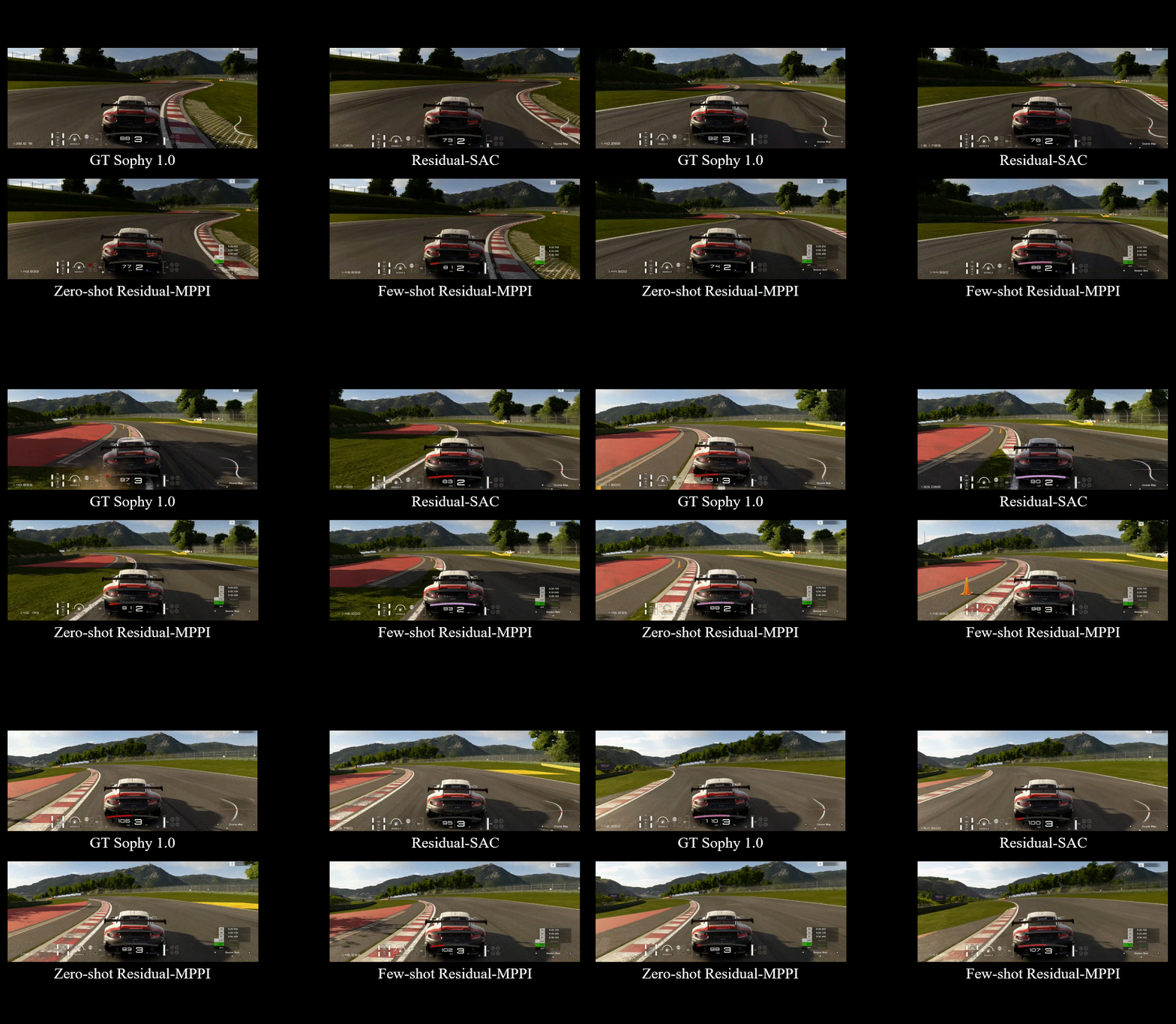
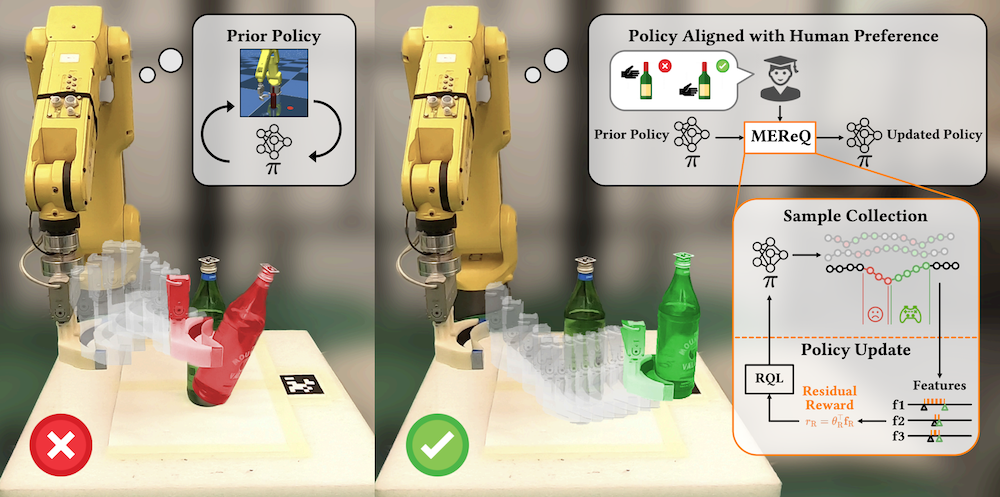
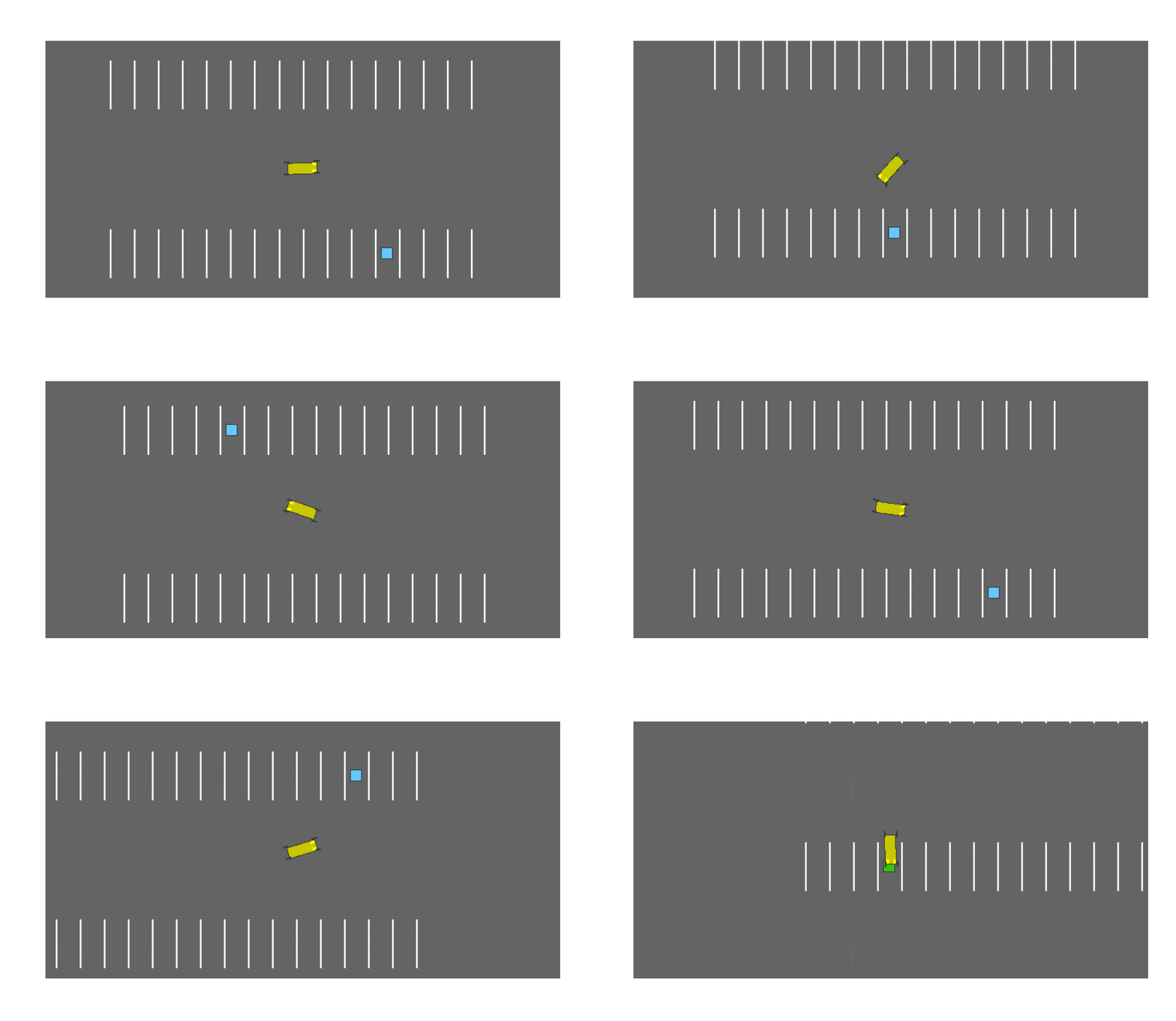
Learning-based autonomous systems must adapt to human behavior, safety constraints, and changing objectives during deployment. We develop methods that combine residual reinforcement learning with control theory for online policy customization, enable offline-to-online RL for safe deployment, and leverage imitation learning from human demonstrations. Our work also explores how foundation models can operate under real-time control constraints to produce robust, human-aware autonomy.
Selected Publications
2026
RLC 2026
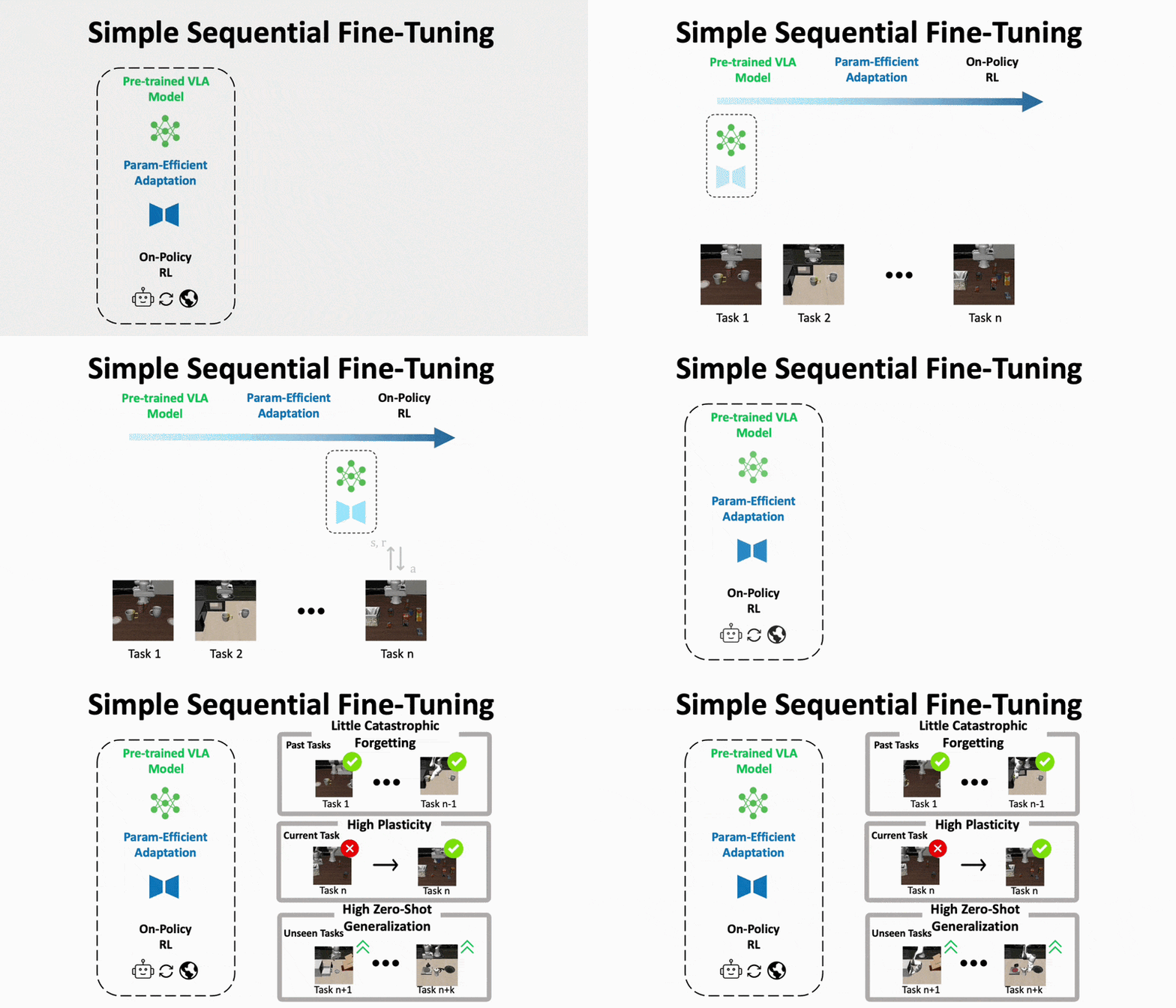
Simple Recipe Works: Vision-Language-Action Models are Natural Continual Learners with Reinforcement Learning
Jiaheng Hu, Jay Shim, Chen Tang, and 4 more authors
In Reinforcement Learning Conference (RLC), 2026
Outstanding Paper Award for Resourcefulness in RL at RLC 2026 Best Paper Award at the ICRA 2026 Workshop on Reinforcement Learning in the Era of Imitation Learning (RL4IL)
@inproceedings{hu2026simplerecipe,title={Simple Recipe Works: Vision-Language-Action Models are Natural Continual Learners with Reinforcement Learning},author={Hu, Jiaheng and Shim, Jay and Tang, Chen and Sung, Yoonchang and Liu, Bo and Stone, Peter and Mart{\'i}n-Mart{\'i}n, Roberto},booktitle={Reinforcement Learning Conference (RLC)},year={2026},note={<strong>Outstanding Paper Award for Resourcefulness in RL at RLC 2026</strong><br><strong>Best Paper Award at the ICRA 2026 Workshop on Reinforcement Learning in the Era of Imitation Learning (RL4IL)</strong>},}
2025
ICLR 2025
Residual-MPPI: Online Policy Customization for Continuous Control
Pengcheng Wang*, Chenran Li*, Catherine Weaver, and 4 more authors
In International Conference on Learning Representations (ICLR), 2025
@inproceedings{wang2024residual,title={{Residual-MPPI}: Online Policy Customization for Continuous Control},author={Wang, Pengcheng and Li, Chenran and Weaver, Catherine and Kawamoto, Kenta and Tomizuka, Masayoshi and Tang, Chen and Zhan, Wei},booktitle={International Conference on Learning Representations (ICLR)},year={2025},}
CoRL 2025
MEReQ: Max-Ent Residual-Q Inverse RL for Sample-Efficient Alignment from Human Intervetion
Yuxin Chen*, Chen Tang*, Chenran Li, and 4 more authors
@article{chen2024mereq,title={{MEReQ}: Max-Ent Residual-Q Inverse RL for Sample-Efficient Alignment from Human Intervetion},author={Chen, Yuxin and Tang, Chen and Li, Chenran and Tian, Ran and Stone, Peter and Tomizuka, Masayoshi and Zhan, Wei},journal={Conference on Robot Learning (CoRL)},year={2025},}
CoRL 2025
ComposableNav: Instruction-Following Navigation in Dynamic Environments via Composable Diffusion
Zichao Hu, Chen Tang, Michael Joseph Munje, and 6 more authors
@article{hu2025composablenav,title={ComposableNav: Instruction-Following Navigation in Dynamic Environments via Composable Diffusion},author={Hu, Zichao and Tang, Chen and Munje, Michael Joseph and Zhu, Yifeng and Liu, Alex and Liu, Shuijing and Warnell, Garrett and Stone, Peter and Biswas, Joydeep},journal={Conference on Robot Learning (CoRL)},year={2025},}
2023
NeurIPS 2023
Residual Q-Learning: Offline and Online Policy Customization without Value
Chenran Li*, Chen Tang*, Haruki Nishimura, and 3 more authors
In Advances in Neural Information Processing Systems (NeurIPS), 2023
@inproceedings{tang2023residual,title={Residual Q-Learning: Offline and Online Policy Customization without Value},author={Li, Chenran and Tang, Chen and Nishimura, Haruki and Mercat, Jean and Tomizuka, Masayoshi and Zhan, Wei},booktitle={Advances in Neural Information Processing Systems (NeurIPS)},year={2023},note={<strong>featured in Nikkei Robotics</strong>},}
 Simple Recipe Works: Vision-Language-Action Models are Natural Continual Learners with Reinforcement LearningIn Reinforcement Learning Conference (RLC), 2026Outstanding Paper Award for Resourcefulness in RL at RLC 2026