TAMS Lab studies the path from advances in AI to real-world autonomy, bridging frontier AI models and autonomous systems that can operate safely and reliably in open-world environments shared with people. Moving AI into the physical world requires more than capable models. It requires coupling AI with sensing, decision-making, and control under real-time constraints, physical uncertainty, limited onboard computing, and continual interaction with people and other agents. We approach deployment as a continuous cycle: build systems that can act in real time, evaluate their readiness for target deployment conditions, and adapt them after deployment as environments, tasks, and human objectives change. Across this cycle, we develop fundamental and practical methods at the intersection of AI, robotics, and control, with focal applications in autonomous driving, social robot navigation, and manipulation.
Developing Physical AI Systems for Real‑Time Autonomy
Co-designing AI models and closed-loop control so autonomous systems can think and act continuously within real-time computing constraints
Evaluation and Validation for Trustworthy Deployment
Building evidence that reveals when, where, and why an autonomous system can or cannot be trusted
Continual and Personalized Adaptation from Deployment Experience
Adapting deployed systems to new conditions and human objectives while preserving prior capabilities
Developing Physical AI Systems for Real-Time Autonomy
Frontier AI models offer powerful capabilities for perception, reasoning, and action, but their computation can be too slow and unpredictable for physical systems with limited onboard resources. A robot cannot pause the world while waiting for inference or communication to finish. We co-design AI models and closed-loop control systems so delayed reasoning, asynchronous execution, and limited computing are treated as part of the autonomy problem. The goal is not simply faster inference, but reliable closed-loop behavior while the physical and social environment continues to change.
Selected Publications
2026
CoRL 2026
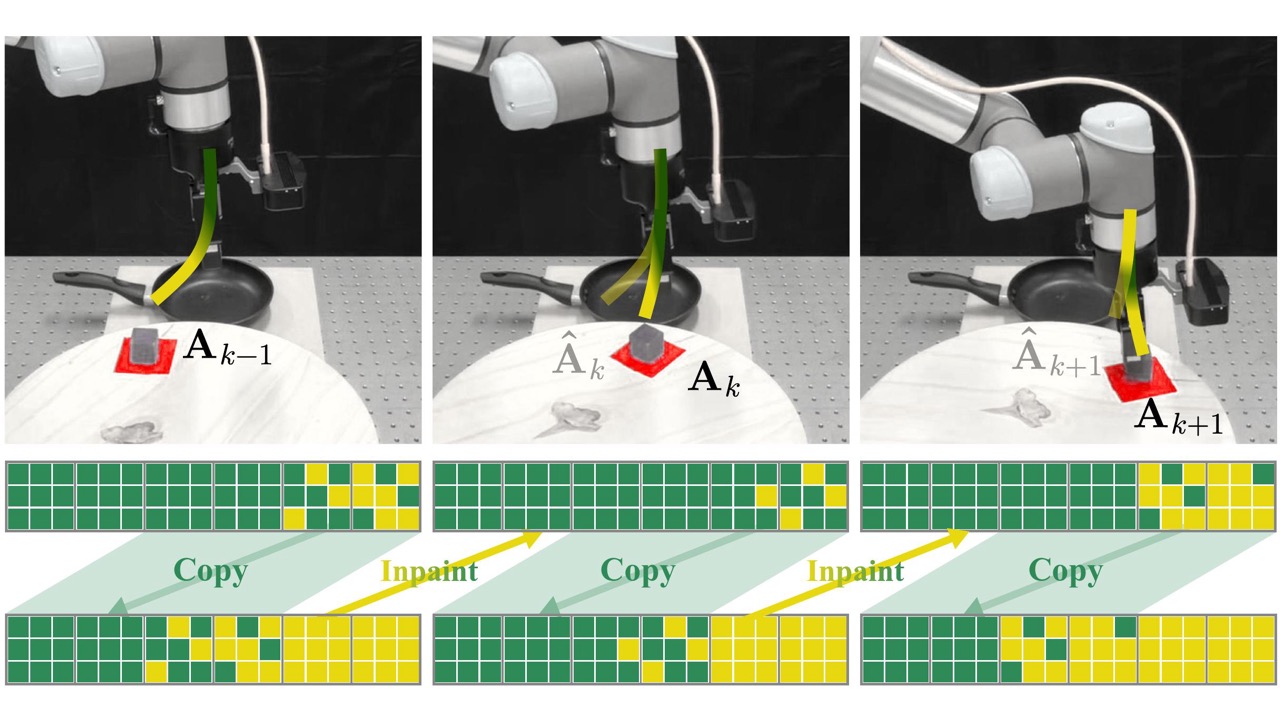
DiscreteRTC: Discrete Diffusion Policies are Natural Asynchronous Executors
Pengcheng Wang, Kaiwen Hong, Chensheng Peng, and 4 more authors
@article{wang2026discretertc,title={{DiscreteRTC}: Discrete Diffusion Policies are Natural Asynchronous Executors},author={Wang, Pengcheng and Hong, Kaiwen and Peng, Chensheng and Driggs-Campbell, Katherine and Tomizuka, Masayoshi and Xu, Chenfeng and Tang, Chen},journal={Conference on Robot Learning (CoRL)},year={2026},}
ICML 2026
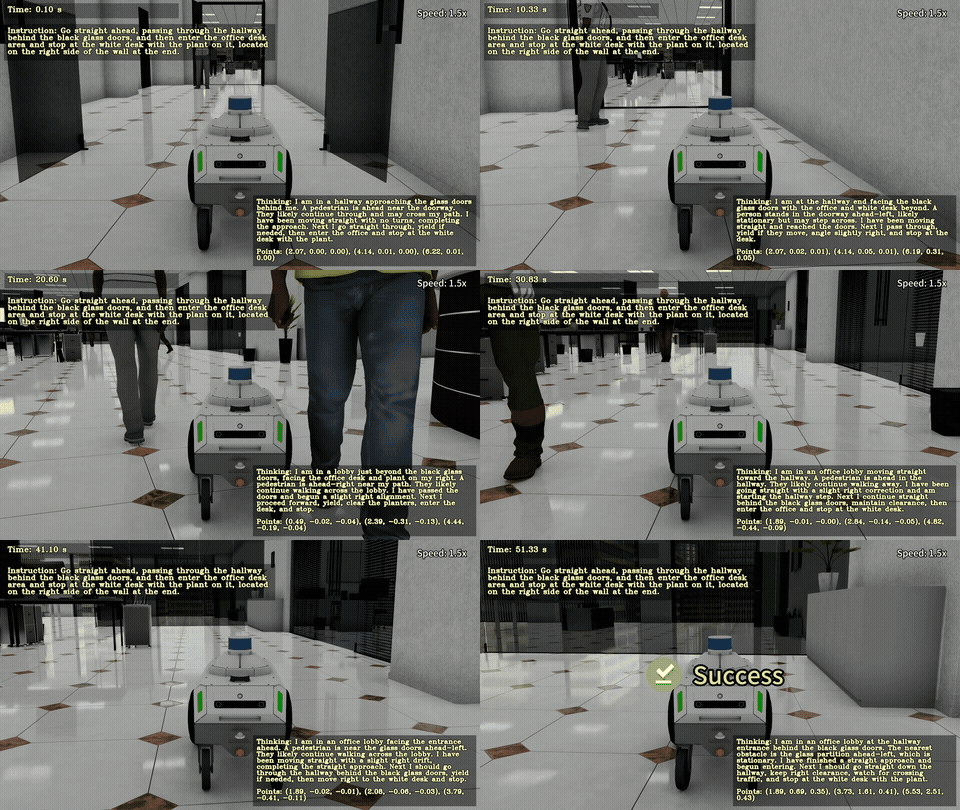
TIC-VLA: A Think-in-Control Vision-Language-Action Model for Robot Navigation in Dynamic Environments
Zhiyu Huang, Yun Zhang, Johnson Liu, and 3 more authors
In International Conference on Machine Learning (ICML), 2026
@inproceedings{huang2026ticvla,title={{TIC-VLA}: A Think-in-Control Vision-Language-Action Model for Robot Navigation in Dynamic Environments},author={Huang, Zhiyu and Zhang, Yun and Liu, Johnson and Song, Rui and Tang, Chen and Ma, Jiaqi},booktitle={International Conference on Machine Learning (ICML)},year={2026},}
Evaluation and Validation for Trustworthy Deployment
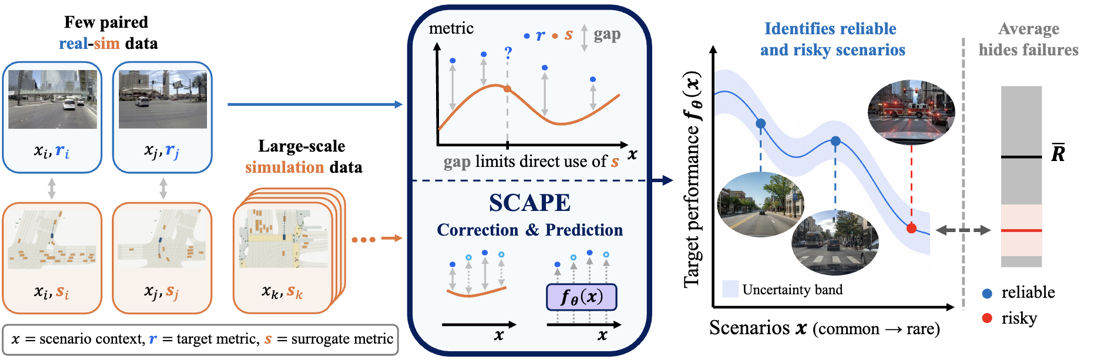
Reliable and efficient evaluation remains a key bottleneck to deploying physical AI systems in open-world environments. A single aggregate score or a small set of real-world tests cannot establish readiness across diverse operating conditions. We integrate generative simulation, sample-efficient evaluation and diagnosis, and human-interaction benchmarks into a unified validation pipeline. This pipeline uses limited real-world data efficiently, expands coverage beyond observed conditions, and exposes risks hidden by aggregate metrics. Together, these components provide practitioners and stakeholders with evidence for informed deployment decisions.
@article{zhu2026scape,title={{SCAPE}: Scenario-Conditioned Simulation-Augmented Policy Evaluation},author={Zhu, Dijie and Oh, Seunghun and Huang, Ruopeng and Huang, Zhiyu and Ma, Jiaqi and Tang, Chen},journal={Conference on Robot Learning (CoRL)},year={2026},}
2025
ICML 2025
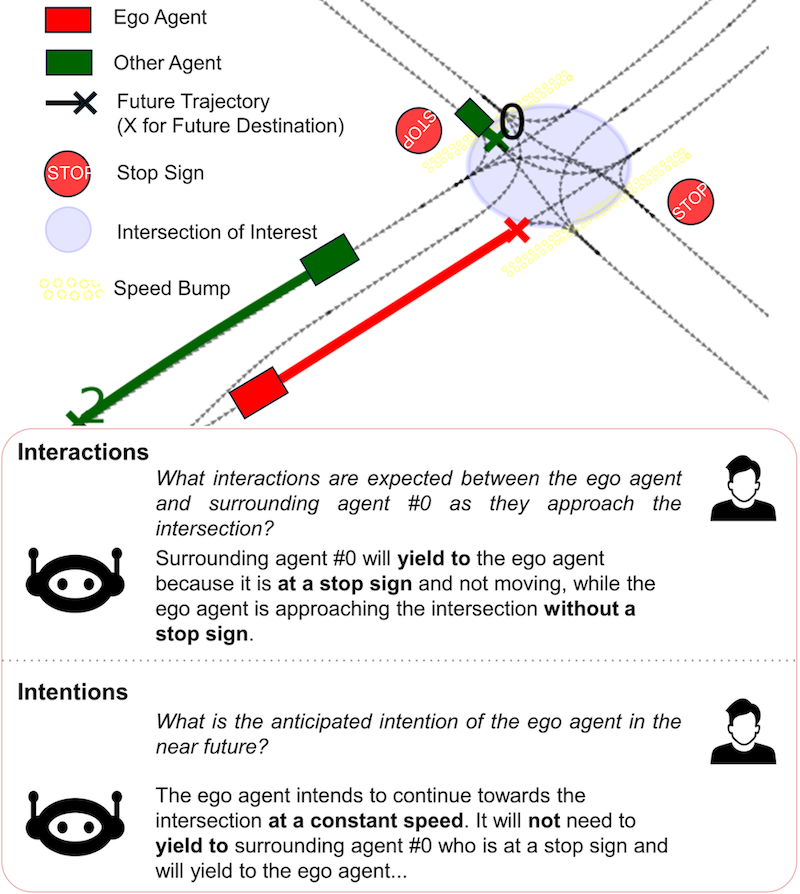
WOMD-Reasoning: A Large-Scale Language Dataset for Interactions and Driving Intentions Reasoning
Yiheng Li, Cunxin Fan, Chongjian Ge, and 9 more authors
Forty-Second International Conference on Machine Learning (ICML), 2025
@article{li2024womd,title={{WOMD-Reasoning}: A Large-Scale Language Dataset for Interactions and Driving Intentions Reasoning},author={Li, Yiheng and Fan, Cunxin and Ge, Chongjian and Zhao, Seth Z. and Li, Chenran and Xu, Chenfeng and Yao, Huaxiu and Tomizuka, Masayoshi and Zhou, Bolei and Tang, Chen and Ding, Mingyu and Zhan, Wei},journal={Forty-Second International Conference on Machine Learning (ICML)},year={2025},}
CoRL 2025
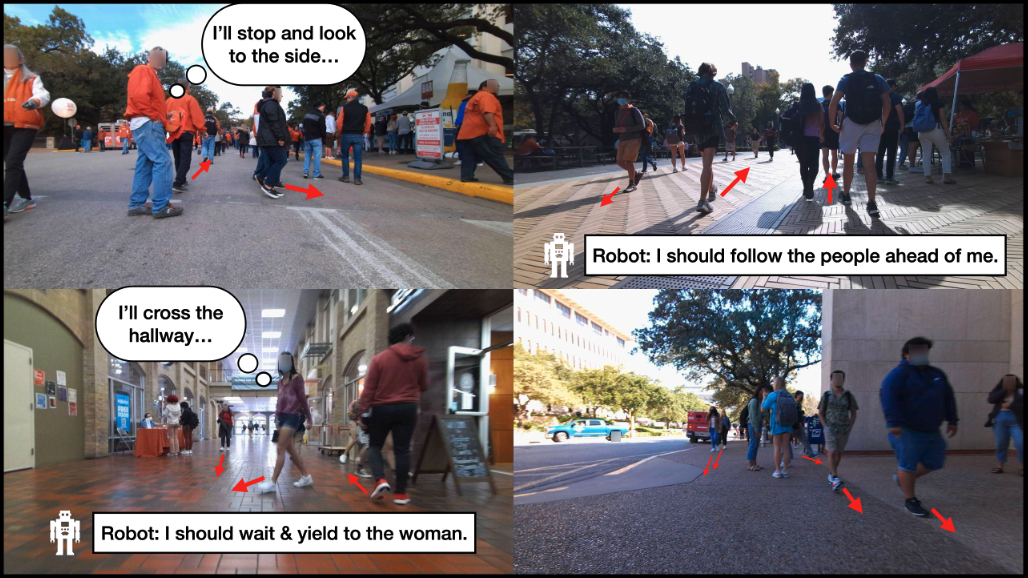
SocialNav-SUB: Benchmarking VLMs for Scene Understanding in Social Robot Navigation
Michael J. Munje, Chen Tang, Shuijing Liu, and 6 more authors
@article{munje2025socialnavsub,title={SocialNav-SUB: Benchmarking VLMs for Scene Understanding in Social Robot Navigation},author={Munje, Michael J. and Tang, Chen and Liu, Shuijing and Hu, Zichao and Zhu, Yifeng and Cui, Jiaxun and Warnell, Garrett and Biswas, Joydeep and Stone, Peter},journal={Conference on Robot Learning (CoRL)},year={2025},}
2024
ECCV 2024
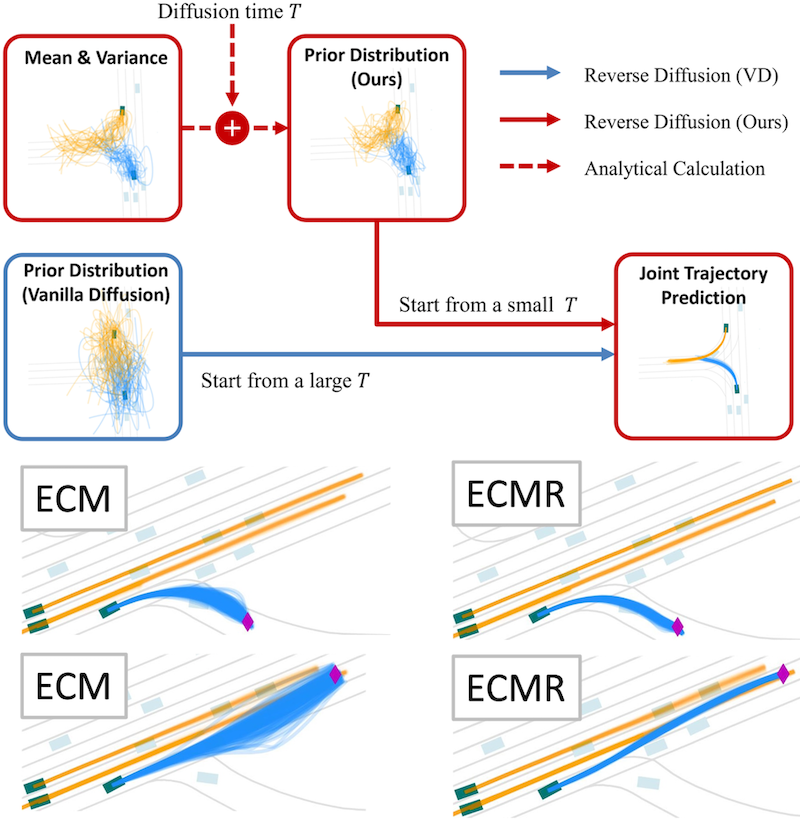
Optimizing Diffusion Models for Joint Trajectory Prediction and Controllable Generation
Yixiao Wang, Chen Tang, Lingfeng Sun, and 8 more authors
In European Conference on Computer Vision (ECCV), 2024
@inproceedings{wang2024OGD,title={Optimizing Diffusion Models for Joint Trajectory Prediction and Controllable Generation},author={Wang, Yixiao and Tang, Chen and Sun, Lingfeng and Rossi, Simone and Xie, Yichen and Peng, Chensheng and Hannagan, Thomas and Sabatini, Stefano and Poerio, Nicola and Tomizuka, Masayoshi and Zhan, Wei},booktitle={European Conference on Computer Vision (ECCV)},year={2024},}
2023
RA-L 2023
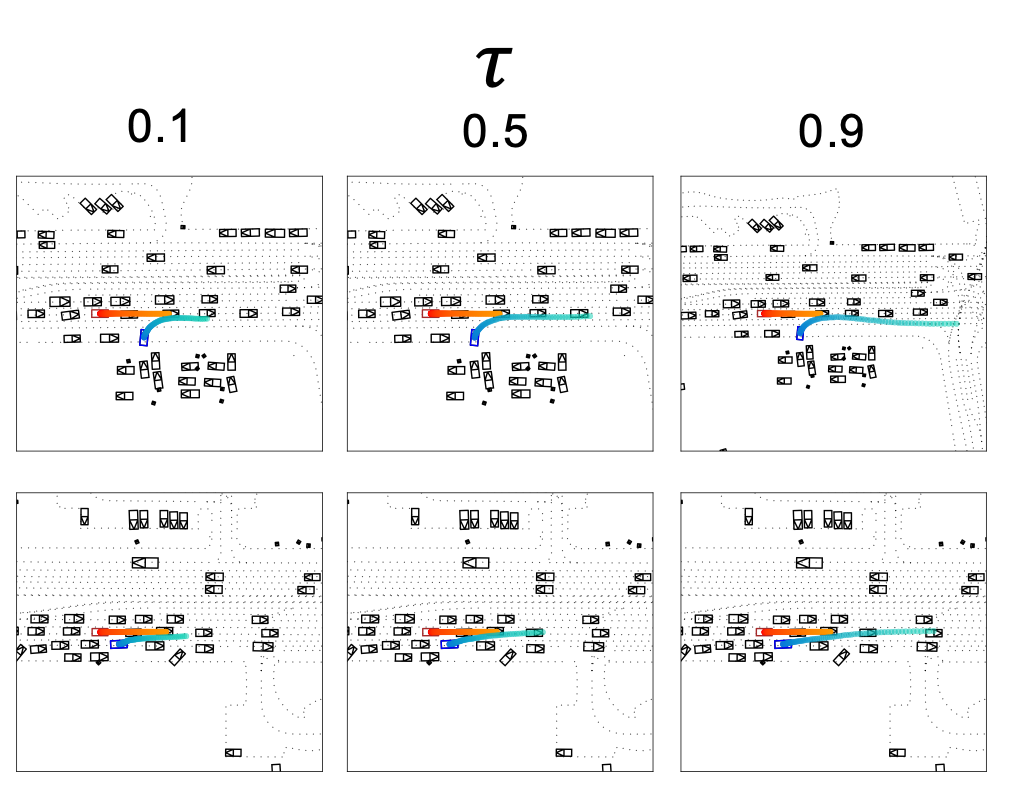
Editing Driver Character: Socially-Controllable Behavior Generation for Interactive Traffic Simulation
Wei-Jer Chang*, Chen Tang*, Chenran Li, and 3 more authors
IEEE Robotics and Automation Letters (RA-L), 2023
presented at 2023 CVPR Workshop on Multi-Agent Behavior: Properties, Computation, and Emergence (MABe) and 2024 IEEE International Conference on Robotics and Automation (ICRA)
@article{chang2023scbg,author={Chang, Wei-Jer and Tang, Chen and Li, Chenran and Hu, Yeping and Tomizuka, Masayoshi and Zhan, Wei},journal={IEEE Robotics and Automation Letters (RA-L)},title={Editing Driver Character: Socially-Controllable Behavior Generation for Interactive Traffic Simulation},year={2023},volume={},number={},pages={1-8},doi={10.1109/LRA.2023.3291897},note={presented at 2023 CVPR Workshop on Multi-Agent Behavior: Properties, Computation, and Emergence (MABe) and 2024 IEEE International Conference on Robotics and Automation (ICRA)}}
2021
NeurIPS 2021
Exploring Social Posterior Collapse in Variational Autoencoder for Interaction Modeling
Chen Tang, Wei Zhan, and Masayoshi Tomizuka
In Advances in Neural Information Processing Systems (NeurIPS), 2021
@inproceedings{tang2021social,author={Tang, Chen and Zhan, Wei and Tomizuka, Masayoshi},booktitle={Advances in Neural Information Processing Systems (NeurIPS)},pages={8481--8494},title={Exploring Social Posterior Collapse in Variational Autoencoder for Interaction Modeling},volume={34},year={2021},}
Continual and Personalized Adaptation from Deployment Experience
No fixed policy can anticipate every environment, task, or user objective it will encounter after deployment. We develop model-based planning, residual reinforcement learning, and continual learning for targeted policy adaptation. Human interventions guide personalized updates, while policy composition reuses existing capabilities for new tasks. Together, these methods support adaptation at multiple timescales, from online refinement of robot behavior to continual updates of foundation-model-based policies.
Selected Publications
2026
RLC 2026
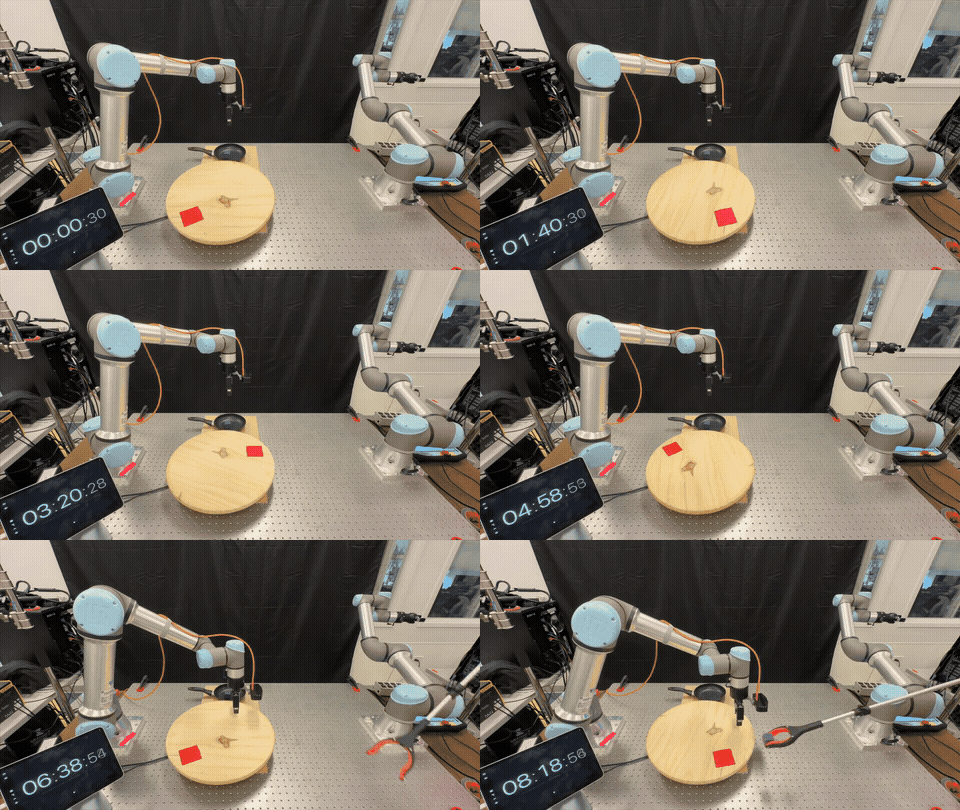
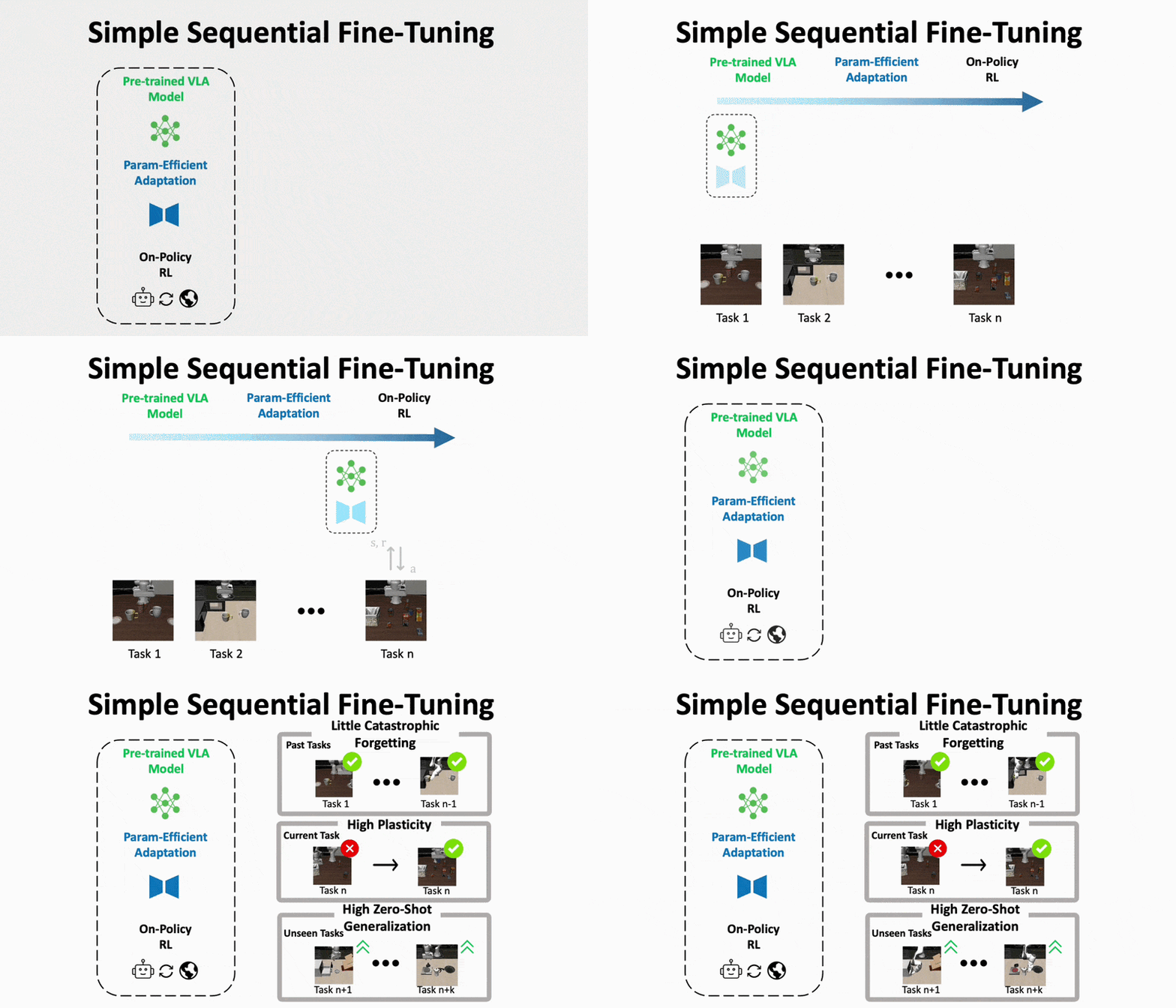
Simple Recipe Works: Vision-Language-Action Models are Natural Continual Learners with Reinforcement Learning
Jiaheng Hu, Jay Shim, Chen Tang, and 4 more authors
In Reinforcement Learning Conference (RLC), 2026
Outstanding Paper Award for Resourcefulness in RL at RLC 2026 Best Paper Award at the ICRA 2026 Workshop on Reinforcement Learning in the Era of Imitation Learning (RL4IL)
@inproceedings{hu2026simplerecipe,title={Simple Recipe Works: Vision-Language-Action Models are Natural Continual Learners with Reinforcement Learning},author={Hu, Jiaheng and Shim, Jay and Tang, Chen and Sung, Yoonchang and Liu, Bo and Stone, Peter and Mart{\'i}n-Mart{\'i}n, Roberto},booktitle={Reinforcement Learning Conference (RLC)},year={2026},note={<strong>Outstanding Paper Award for Resourcefulness in RL at RLC 2026</strong><br><strong>Best Paper Award at the ICRA 2026 Workshop on Reinforcement Learning in the Era of Imitation Learning (RL4IL)</strong>},}
2025
ICLR 2025
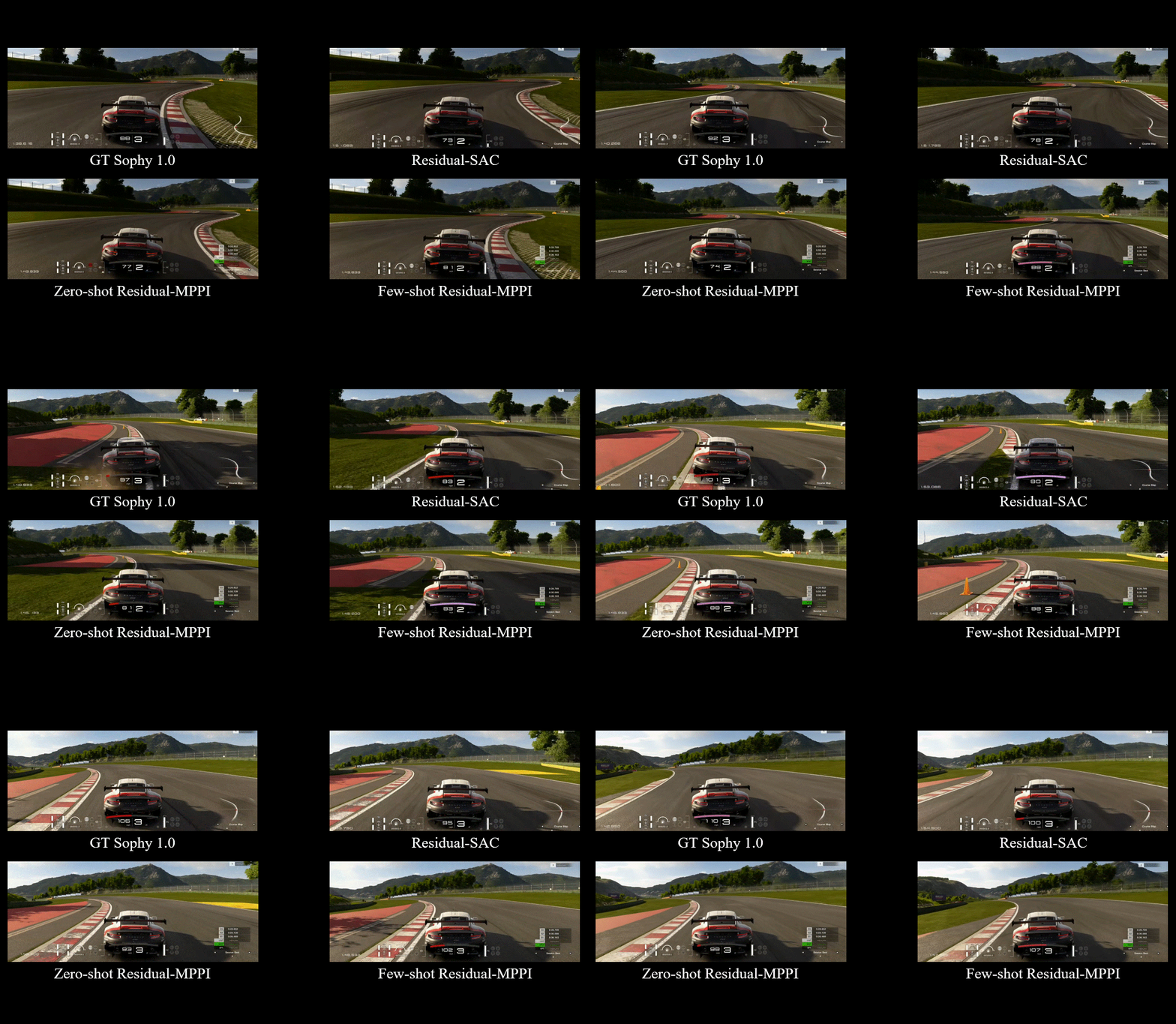
Residual-MPPI: Online Policy Customization for Continuous Control
Pengcheng Wang*, Chenran Li*, Catherine Weaver, and 4 more authors
In International Conference on Learning Representations (ICLR), 2025
@inproceedings{wang2024residual,title={{Residual-MPPI}: Online Policy Customization for Continuous Control},author={Wang, Pengcheng and Li, Chenran and Weaver, Catherine and Kawamoto, Kenta and Tomizuka, Masayoshi and Tang, Chen and Zhan, Wei},booktitle={International Conference on Learning Representations (ICLR)},year={2025},}
CoRL 2025
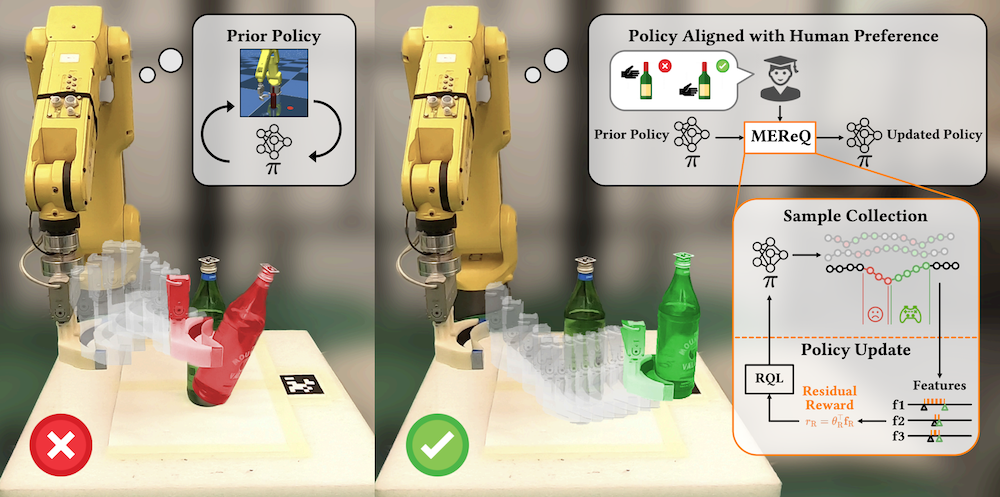
MEReQ: Max-Ent Residual-Q Inverse RL for Sample-Efficient Alignment from Human Intervetion
Yuxin Chen*, Chen Tang*, Chenran Li, and 4 more authors
@article{chen2024mereq,title={{MEReQ}: Max-Ent Residual-Q Inverse RL for Sample-Efficient Alignment from Human Intervetion},author={Chen, Yuxin and Tang, Chen and Li, Chenran and Tian, Ran and Stone, Peter and Tomizuka, Masayoshi and Zhan, Wei},journal={Conference on Robot Learning (CoRL)},year={2025},}
CoRL 2025
ComposableNav: Instruction-Following Navigation in Dynamic Environments via Composable Diffusion
Zichao Hu, Chen Tang, Michael Joseph Munje, and 6 more authors
@article{hu2025composablenav,title={ComposableNav: Instruction-Following Navigation in Dynamic Environments via Composable Diffusion},author={Hu, Zichao and Tang, Chen and Munje, Michael Joseph and Zhu, Yifeng and Liu, Alex and Liu, Shuijing and Warnell, Garrett and Stone, Peter and Biswas, Joydeep},journal={Conference on Robot Learning (CoRL)},year={2025},}
2023
NeurIPS 2023
Residual Q-Learning: Offline and Online Policy Customization without Value
Chenran Li*, Chen Tang*, Haruki Nishimura, and 3 more authors
In Advances in Neural Information Processing Systems (NeurIPS), 2023
@inproceedings{tang2023residual,title={Residual Q-Learning: Offline and Online Policy Customization without Value},author={Li, Chenran and Tang, Chen and Nishimura, Haruki and Mercat, Jean and Tomizuka, Masayoshi and Zhan, Wei},booktitle={Advances in Neural Information Processing Systems (NeurIPS)},year={2023},note={<strong>featured in Nikkei Robotics</strong>},}
For a complete list of publications, visit the Publications page.

 Editing Driver Character: Socially-Controllable Behavior Generation for Interactive Traffic SimulationIEEE Robotics and Automation Letters (RA-L), 2023presented at 2023 CVPR Workshop on Multi-Agent Behavior: Properties, Computation, and Emergence (MABe) and 2024 IEEE International Conference on Robotics and Automation (ICRA)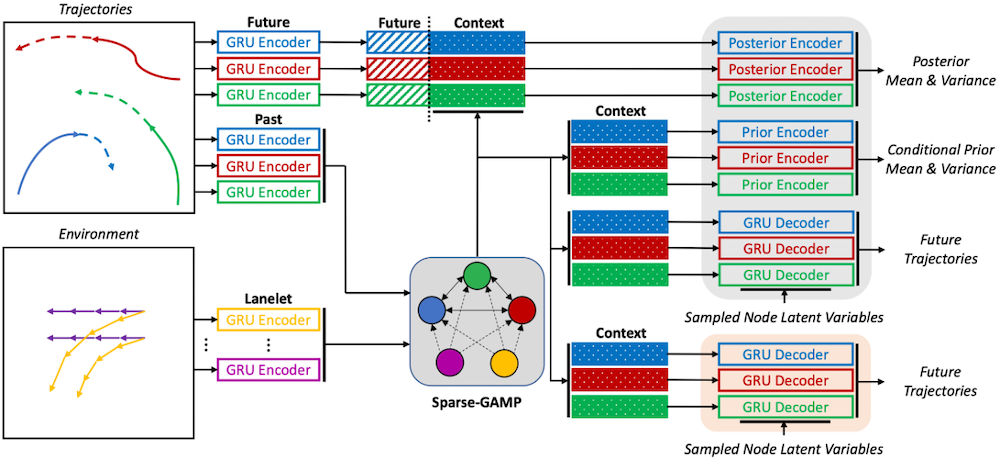
 Simple Recipe Works: Vision-Language-Action Models are Natural Continual Learners with Reinforcement LearningIn Reinforcement Learning Conference (RLC), 2026Outstanding Paper Award for Resourcefulness in RL at RLC 2026